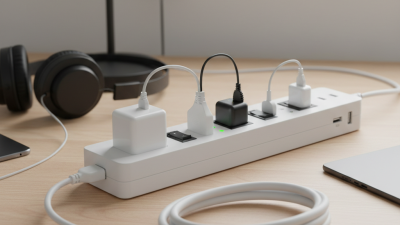
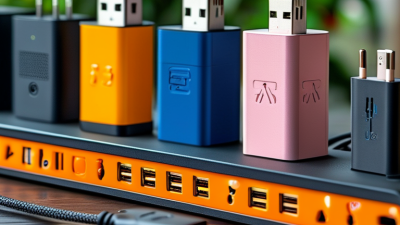
You know, China's hidden market for desk extension leads is really evolving. It’s not just about making simple cables anymore—now, companies are moving toward more integrated workspace solutions. Buyers aren’t just after anything; they’re looking for compact casings, safer wiring, switches they can rely on, and tidy cable management. Basically, practicality is the name of the game. After all, your desk should feel calm and organized, even if you’ve got three devices plugged in.
Industry reports back this change up. For instance, Grand View Research points out that smart home gadgets and connected office gear are booming. Meanwhile, Mordor Intelligence highlights the rising demand for electrical products that are not just functional, but also neat and space-saving. But here’s the thing: these reports don’t always measure every hidden desk extension lead directly. That’s important because, often, they lump different kinds of extension cords together—like standalone strips versus furniture-integrated units—making it hard to see the real differences.
China remains a key player mainly because its manufacturers often handle everything from tooling to electronic assembly and export logistics. Companies like Bull Group, CHINT, and Delixi Electric showcase the country’s broader capacity in electrical manufacturing. But, let’s be honest—just having a shiny sample isn’t enough. Serious buyers need to dig deeper. They should look into testing certifications like IEC 60884-1 or UL 817, check the copper wire specs, ensure there’s proper thermal protection, verify socket shutter designs, and confirm factory traceability. Plus, for a 3-socket extension lead, viewing clear load ratings and solid mounting hardware is a must.
Dr. John Drengenberg, who used to be the UL Consumer Safety Director, always reminded folks: “A power strip should support safe electrical planning, not replace it.” The message is simple, but the engineering behind it isn’t—many suppliers still focus too much on looks, which can make inspecting wiring tricky. The top manufacturers in China will really stand out by having well-documented testing, transparent specs, and reliable after-sales support. That’s actually an area where the industry still has room to grow.
China Top Hidden Desk Extension Lead Manufacturers
What Are Hidden Desk Extension Leads?
Hidden desk extension leads are compact power modules built into, beneath, or behind a workstation. They usually combine sockets, USB charging ports, and a retractable cable. When unused, the unit stays flush with the desk surface or remains concealed under the tabletop. This reduces loose cables around monitors, lamps, and docking equipment.
They are more than decorative accessories. A well-designed module should include overload protection, heat-resistant housing, secure mounting, and clear electrical ratings. IEC 60884-1 provides safety requirements for plugs and socket-outlets used in similar applications. In practice, buyers should also verify local certification and installation rules. Small details matter.
The IEA’s Buildings 2023 report states that buildings consumed about 30% of global final energy in 2022. Hidden power systems cannot solve that challenge alone, but they can support cleaner workstation layouts and easier equipment control. Research on modern offices also shows continuing growth in connected workplace equipment, increasing demand for accessible power and data connections. Market reports often predict strong expansion in smart-office infrastructure, although forecasts differ by region and definition.
A hidden extension lead is not automatically safer. Poor ventilation, overloaded sockets, or weak cable routing can create risks. I have seen attractive installations fail because the fixing plate was too thin. Manufacturers should document testing, load limits, replacement procedures, and real installation conditions. That transparency is still missing in parts of the market.
China’s hidden desk extension lead industry developed quietly alongside modern office furniture. Early products were often simple power strips placed on or under desks. They solved access problems, but cables remained visible and difficult to manage.
Manufacturers gradually studied workplace habits. They added recessed sockets, sliding covers, compact housings, and cable channels for meeting tables. Factory teams now test socket alignment, switch durability, cable bending, and heat performance.
Small details matter. A loose cover can collect dust. A short cable can limit installation options. Product engineers also compare materials, assembly tolerances, and packaging damage during transport.
Much of this progress came from contract production and close customer feedback. Furniture suppliers requested cleaner layouts, while installers demanded faster mounting methods. This created a less visible but highly competitive manufacturing network. Some factories expanded from basic assembly into tooling, injection molding, electrical testing, and customized design support. However, development is uneven. A polished appearance does not always prove reliable internal construction. Buyers should review test records, wiring quality, grounding methods, and production consistency.
The same manufacturing knowledge supports related products, including the Outdoor Extension Lead. Yet outdoor use requires stronger protection against moisture, impact, and temperature changes. Desk products need a different priority: quiet operation, safe heat control, compact dimensions, and easy access. China’s industry has improved considerably, but continuous testing and honest quality review remain necessary. Mistakes still happen. That is why dependable manufacturers treat feedback as engineering data, not criticism.
Top Chinese manufacturers of hidden desk extension leads treat the product as furniture hardware, not a loose cable. Their key feature is compact integration. A recessed module can sit level with a desktop and open with one hand. Good designs hide wiring beneath the panel. They also leave enough clearance for plugs and chargers. This matters in meeting rooms, home offices, and shared workstations.
Reliable manufacturers control copper conductors, insulation, sockets, switches, and housing materials through documented inspections. They test continuity, grounding, temperature rise, insertion force, and repeated cover movement. A Two Socket Extension Lead should support practical charging without feeling crowded. Better factories provide drawings, sample approval, traceable batches, and clear ratings. They can adjust cable length, mounting depth, and outlet layout for different desks. Compliance evidence should match destination-market requirements, not vague claims.
Experience shows that small details decide daily satisfaction. A soft-close lid, firm screw points, and a smooth cable exit reduce noise and strain. However, not every supplier communicates tolerances well. Some samples look polished but reveal loose hinges after repeated use. That deserves scrutiny. Buyers should request test reports, material declarations, and photographs of internal assembly. Factory audits and pilot orders add confidence. Even then, installation instructions may need improvement, especially for thin panels. Honest manufacturers welcome questions and correct weak points before volume production.
China Top Hidden Desk Extension Lead Manufacturers
Hidden desk extension leads begin with the furniture, not the socket. Engineers measure panel thickness, cable routes, mounting depth, and clearance beneath the desktop. A concealed module must open smoothly without weakening the desk. Design teams often use flame-retardant plastics, copper conductors, and corrosion-resistant contacts. Small details matter. Spring-loaded covers, grounded terminals, and strain relief support safer daily movement.
For a 5m Switched Extension Lead, cable flexibility and voltage drop require careful calculation. Longer cable does not automatically mean better performance. Manufacturers select conductor sizes according to rated current, temperature, and intended installation conditions. They also check switch durability, plug alignment, shutter movement, and heat dissipation around the hidden housing. Applicable safety requirements vary by market, so technical drawings and test plans must match the destination.
Production usually includes incoming material inspection, precision molding, terminal assembly, wiring, and controlled electrical testing. Tests may examine insulation resistance, earth continuity, polarity, temperature rise, and switch endurance. Each batch should have traceable records. Experienced Chinese manufacturers often use jigs to control cable length and terminal positioning. Yet no design is perfect. Some early samples look neat but reveal tight bends after repeated opening. Practical testing should challenge those weak points before shipment, not merely confirm a clean appearance.
| Manufacturing Dimension | Typical Design or Production Detail | Common Materials / Components | Quality and Safety Considerations |
|---|---|---|---|
| Product Concept and Application | Designed for installation beneath or inside a desk, worktop, meeting table, kitchen island, or office partition to provide concealed access to mains power. | Compact housing, mounting bracket, cable assembly, socket modules, protective cover, and optional USB charging module. | The design must allow convenient access while preventing exposed cable loops, accidental contact, and interference with drawers or moving desk components. |
| Housing Design | Enclosures are commonly developed as compact rectangular, cylindrical, pop-up, or under-desk modules, depending on the installation method. | Flame-retardant engineering plastics such as polycarbonate or ABS; aluminum may be used for decorative covers or structural parts. | Housing dimensions, wall thickness, ventilation, and impact resistance are reviewed before tooling. Materials should be suitable for the intended electrical and environmental conditions. |
| Electrical Configuration | Configurations may include 2 to 6 power outlets, with optional USB-A or USB-C charging ports and separate cable-entry positions. | Socket modules, copper or copper-alloy contacts, insulated terminals, switches, circuit protection components, and charging circuitry where applicable. | Outlet arrangement must maintain adequate spacing and insulation distances. The electrical configuration is selected according to the destination market and applicable standards. |
| Cable Selection | Flexible cable assemblies are selected according to the rated current, installation method, plug type, and regional requirements. | Copper conductors, PVC or other approved insulation, molded plug, strain-relief sleeve, and protective outer jacket. | Conductor cross-section, insulation temperature rating, bending performance, grounding arrangement, and plug compatibility must match the product specification. |
| Rated Electrical Parameters | Common market configurations include 10 A or 16 A products at approximately 220–250 V AC, while other regions use different voltage and current ratings. | Rated socket contacts, terminal blocks, internal wiring, fuse or overload protection where required, and suitable switching components. | Voltage and current ratings must be clearly marked. The finished product should not be operated above its specified load or used with incompatible plugs and sockets. |
| Tooling and Molding | Plastic housings and covers are produced using injection molding. Tooling incorporates mounting points, cable exits, screw bosses, clips, and surface textures. | Steel injection molds, flame-retardant thermoplastic resin, ejector components, inserts, and replaceable mold parts. | Mold-flow review, dimensional checks, flash control, surface inspection, and verification of fit between molded components help maintain consistent assembly quality. |
| Metal Part Fabrication | Brackets, mounting plates, decorative trims, and internal supports may be stamped, laser-cut, bent, or machined before finishing. | Steel, stainless steel, or aluminum sheet and profiles; powder coating, anodizing, or other corrosion-resistant finishes may be applied. | Edges should be deburred, mounting holes should remain within tolerance, and finished parts should not damage cables or create accessible sharp edges. |
| Cable and Plug Assembly | Conductors are cut, stripped, crimped, terminated, and connected to the socket module. The plug and cable exit are secured with strain relief. | Automated or semi-automated wire processing equipment, terminals, crimp contacts, solder-free connectors, and molded strain-relief parts. | Crimp height, pull strength, conductor insertion, polarity, earth continuity, and insulation integrity are checked during production. |
| Socket Module Installation | Socket mechanisms, shutters, switches, USB modules, and protective covers are installed into the housing in a defined sequence. | Socket carriers, spring contacts, shutters, screws, clips, charging boards, and insulating barriers. | Components must be securely retained and correctly aligned. Protective shutters and covers should operate smoothly without exposing live parts during normal use. |
| Grounding and Insulation | Grounded versions include an earth conductor and grounding contacts connected to all applicable exposed conductive parts. | Grounding terminals, copper or brass contacts, insulated barriers, heat-resistant sleeving, and protective insulation materials. | Earth continuity, insulation resistance, dielectric strength, polarity, and leakage-related checks are essential safety tests for applicable product types. |
| Under-Desk Installation | Products may be fixed with screws, clamps, brackets, adhesive mounting systems, or integrated cut-out mechanisms. | Mounting brackets, screws, threaded inserts, clamps, gaskets, cable clips, and installation templates. | Mounting hardware must support the product securely without crushing the housing or cable. The installation method should allow maintenance without compromising safety. |
| Pop-Up and Retractable Mechanism | Retractable desk units use a spring-assisted, hinged, sliding, or motorized mechanism to conceal sockets when they are not in use. | Springs, hinges, guides, dampers, locking parts, seals, and wear-resistant polymer or metal components. | Repeated-cycle testing checks opening force, closing action, alignment, mechanical retention, pinch-point risks, and continued electrical protection after use. |
| Surface Finish and Appearance | Visible components can be produced with matte, textured, polished, anodized, or powder-coated finishes to coordinate with desk surfaces. | Textured plastic, powder coating, anodized aluminum, decorative films, printed markings, and laser-etched labels. | Inspection typically covers color consistency, scratches, dents, coating adhesion, print clarity, and uniformity of visible gaps and joints. |
| Functional Testing | Each production batch or finished unit is checked for socket operation, switch operation, USB output where fitted, cable retention, and mechanical movement. | Electrical safety testers, load testers, USB test equipment, torque tools, gauges, and mechanical cycle-test fixtures. | Test results should be traceable to production batches. Failed units are isolated, analyzed, repaired where permitted, and retested before release. |
| Electrical Safety Testing | Typical checks include continuity, polarity, insulation resistance, dielectric withstand, earth-bond performance, and abnormal-operation testing where applicable. | Automated safety analyzer, high-voltage tester, insulation resistance meter, earth-bond tester, and calibrated load equipment. | Testing parameters must follow the product specification and the electrical safety requirements applicable to the intended sales market. |
| Mechanical and Durability Testing | Testing may include plug insertion and withdrawal, switch operation, cover movement, cable flexing, mounting strength, and repeated opening and closing. | Cycle-test rigs, plug gauges, force gauges, cable-flex equipment, torque meters, and environmental test chambers. | Testing verifies that repeated use does not produce loose contacts, cracked housings, exposed conductors, excessive wear, or unsafe mechanical movement. |
| Thermal and Load Evaluation | Products are evaluated under their specified electrical load to assess temperature rise at contacts, terminals, cable connections, and housing surfaces. | Thermocouples, infrared measurement equipment, controlled loads, thermal chambers, and data-recording systems. | Temperature rise must remain within the limits defined by the applicable design and safety requirements. Overloading during normal use should be prevented through clear markings and instructions. |
| Compliance Documentation | Technical files may include drawings, bills of materials, risk assessments, test reports, labels, user instructions, and production inspection records. | Engineering specifications, inspection checklists, calibration records, material declarations, and conformity documentation. | Applicable requirements vary by destination market. Documentation should identify the rated parameters, installation limitations, warnings, and relevant test evidence. |
| Final Assembly Inspection | Finished units are checked for correct components, secure fasteners, cable routing, socket alignment, markings, accessories, and packaging completeness. | Visual inspection standards, torque tools, dimensional gauges, barcode or batch labels, and packaging checklists. | Inspection confirms that the delivered product matches the approved sample and that no loose parts, damaged cables, missing labels, or cosmetic defects affect safe use. |
| Packaging and Shipment | Units are protected against impact, moisture, abrasion, and cable deformation during storage and transportation. | Protective bags, molded inserts, cartons, installation hardware packs, instruction sheets, and batch identification labels. | Packaging should preserve the socket covers, switches, mounting parts, and cable assembly. Storage instructions should avoid excessive heat, moisture, and crushing loads. |
China’s top hidden desk extension lead manufacturers treat safety as a design requirement, not a marketing phrase. Their products should follow relevant GB/T standards for plugs, sockets, wiring, and household electrical accessories. Many factories also maintain ISO 9001 quality systems, while selected products may require China Compulsory Certification, depending on their category and intended use.
For a 6 Socket Extension Lead, inspectors should check insulation resistance, dielectric strength, grounding continuity, temperature rise, and overload performance. A concealed unit needs more than a neat appearance. Its aluminum housing, cable entry, socket shutters, and mounting brackets must resist heat, movement, and accidental contact. Flame-retardant materials should be verified through test reports, not only supplier claims. Production samples should match the certified design.
Reliable manufacturers keep batch records and test finished units before shipment. Factory audits can reveal loose terminals, uneven socket alignment, or cables with incomplete markings. These small faults matter under a desk. Certification is useful, but it is not proof of every shipment’s quality. That is where buyers must remain careful. Some documentation may be outdated or limited to one model. Independent testing and random inspections provide stronger evidence. Even experienced teams can miss a wiring defect. Better processes reduce that risk, rather than pretending it disappears.
China Top Hidden Desk Extension Lead Manufacturers
Selecting a reliable Chinese manufacturer requires more than comparing unit prices. UNIDO’s International Yearbook of Industrial Statistics 2024 reported that China contributed about 31.6% of global manufacturing value added in 2022. This scale offers strong supply-chain advantages, but factory quality still varies widely. Ask for documented production experience with concealed desk extension leads, retractable mechanisms, and heat-resistant housings. A polished showroom proves little.
Review compliance evidence against relevant requirements, including IEC 60884-1 and applicable Chinese GB/T standards. Request current test reports, material declarations, and calibration records. Verify that the reports match the exact model, socket layout, cable size, and rated load. ISO’s 2023 Survey recorded more than 1.2 million ISO 9001 certificates worldwide, yet certification alone cannot confirm daily process discipline. Audit incoming-material checks, wiring inspection, torque testing, insulation testing, and final sampling. Watch a real assembly line.
For hidden units, test more than appearance. Repeatedly open and close the mechanism. Measure temperature rise under rated load. Inspect cable bending, screw terminals, flame-retardant plastics, and child-protection features where relevant. Ask how defective batches are isolated and traced. Request a pilot order before mass production. My own practical preference is simple: approve samples only after independent testing. I have seen attractive prototypes fail after repeated extension cycles. That weakness is easy to miss. A dependable supplier welcomes inconvenient questions, shares measurable records, and accepts corrective-action deadlines.
China-made multi-gang USB sockets are gaining attention as households and workplaces seek practical solutions for powering appliances and charging mobile devices. Recent market research indicates that demand is being supported by home-office setups, smart-device usage, compact living spaces, and greater interest in built-in electrical safety. Buyers increasingly value products that combine flexible connectivity, durable construction, and compliance with recognized safety requirements.
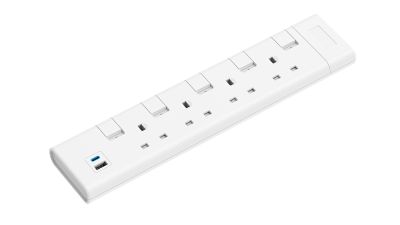
Designed for modern indoor environments, this power solution provides four independent AC outlets and two USB ports for everyday devices. Its SKD detachable wire port supports convenient cable assembly without additional tools, while the flame-retardant housing enhances protection during regular use. Precision-stamped brass terminals help resist oxidation and deformation, contributing to dependable long-term performance. Built to comply with BS1363A requirements, the socket includes safety shutters and a 13A fuse for added protection against common electrical risks. Suitable for homes, offices, study areas, and other daily applications, it is manufactured in China and supplied through reliable channels for customers seeking consistent quality, easy installation, and efficient power access.
: It is a compact power module installed inside, beneath, or behind a desk. It may include sockets, USB ports, and a retractable cable. When closed, it stays nearly flush with the desktop. Less cable clutter.
It can support monitors, desk lamps, chargers, and docking equipment. Check the total load before connecting several devices. A crowded socket is not automatically unsafe.
Not necessarily. Safety depends on overload protection, grounding, ventilation, cable routing, and secure mounting. A concealed unit can still overheat under a desk. The appearance proves very little.
Look for clear electrical ratings, heat-resistant housing, and overload protection. Check continuity, grounding, temperature rise, and repeated cover movement. Local certification may also apply. Ask for records.
Measure the desk thickness and mounting depth before ordering. Leave space for plugs, chargers, and cable bends. Use firm fixing points, especially on thin panels. Weak plates can fail.
Many suppliers can adjust cable length, outlet layout, and mounting depth. They may also modify covers or cable exits for meeting tables. Approve a physical sample before larger production. Drawings can miss practical problems.
A smooth lid, quiet movement, and firm screw points improve daily use. A short cable may restrict installation. A loose cover may collect dust. Small details matter.
Request test reports, material information, assembly photographs, and traceable batch records. A pilot order can reveal loose hinges, poor wiring, or damaged packaging. Factory audits provide more confidence, but they are not perfect. Keep asking questions.
This guide explores the development and production of hidden desk extension leads in China, explaining how these products integrate power access into desks while keeping workspaces organized and visually clean. It examines the growth of China’s manufacturing sector, including improvements in product design, engineering capabilities, production efficiency, and customized solutions for offices, homes, hospitality spaces, and commercial environments. Key features of leading manufacturers may include compact construction, practical cable management, durable materials, multiple outlet configurations, and reliable quality control.
The article also outlines how a hidden desk extension lead is designed, assembled, tested, and prepared for different installation requirements. It discusses the importance of electrical safety standards, quality certifications, material inspection, performance testing, and consistent manufacturing processes. Finally, it explains how buyers can evaluate Chinese manufacturers by reviewing technical capabilities, factory experience, customization support, communication, production capacity, quality management, sample performance, and after-sales service, helping them select a dependable long-term supplier.