When you're picking an extension socket supplier, it's not just about who gives you the lowest price. If you're buying globally, you've also got to think about electrical safety, whether their manufacturing is consistent, how much they can actually deliver, and what kind of after-sales support they offer. And honestly, a slick catalog can easily distract you from weak strain relief, thin conductors, or test records that are vague or missing. In this guide, I'll walk through ten suppliers worth a closer look — names like Schneider Electric, Legrand, Brennenstuhl, Masterplug, and Allocacoc.
John Drengenberg, who used to be Consumer Safety Director at UL, liked to say, “Safety is not an accident.” And honestly? That warning still rings true for any purchasing team today. If you're looking at an extension socket, you want one that's actually reliable—so check for clear ratings, the right cable cross-sections, child-protection features, thermal protection, and quality testing you can trace. Buyers should also look into plug compatibility, how strong the packaging is, minimum order quantities, and what happens if replacements are needed. It's the little details that make the difference.
Honestly, it depends on what you're setting up. If it's an office, a retail display, or some temporary workstation, a compact 3 Socket Extension Lead might be all you need. But other setups call for longer cables, higher current ratings, or better dust protection. So the right supplier really comes down to the application—not whatever the ads happen to say. So this review is basically a side-by-side look at product ranges, certifications, what factories can actually do, customization options, and international logistics. And when there's enough info available, it also takes customer feedback and any recurring quality issues into account.
Look, no ranking is ever perfect. Supplier info shifts all the time, and even published specs can need a second look. Yeah, that's a bit uncomfortable—but it's also just how it is. Before you place a big order, ask for current test reports, samples, and written warranty terms. And remember: the best suppliers aren't always the cheapest ones. It's the companies that actually communicate, back up what they claim, and keep showing up with the same quality shipment after shipment.
The global extension socket market is becoming more fragmented and specification-driven. Grand View Research estimates that the global power strip market reached approximately USD 12 billion in 2023. It also forecasts steady growth through 2030, supported by home offices, commercial construction, and consumer electronics. Demand is not uniform. Europe favors 230-volt systems, while North America commonly uses 120-volt configurations.
For global buyers, supplier selection now depends on more than unit price. Reliable manufacturers should provide test reports, traceable materials, factory inspection records, and stable production capacity. IEC 60884-1 remains a key reference for plugs and socket-outlets in many markets. Buyers requesting an Euro Socket Extension should verify pin geometry, grounding, child-protection shutters, cable cross-section, and rated load. A 16-amp rating alone does not prove safe performance. The plug, conductor, switch, and housing must work as one system.
Regional logistics also shape the supplier landscape. The World Bank’s Logistics Performance Index shows meaningful differences in customs efficiency and delivery reliability between trading regions. These gaps can turn a low quotation into a costly delay. Sample testing should include heat rise, repeated insertion, bending, and overload protection. Not every supplier publishes complete evidence. That is a warning. I would also question unusually low prices, although this judgment can be imperfect without an on-site audit. Product labeling, multilingual documentation, warranty terms, and spare-part access deserve equal attention. Small details matter.
| Rank | Anonymous Supplier Profile | Primary Manufacturing Region | Product Focus | Common Electrical Ratings | Plug and Socket Standards | Typical Order Profile | Common Compliance Documentation | Best-Fit Buyer Segment |
|---|---|---|---|---|---|---|---|---|
| 1 | Supplier A High-volume OEM |
Eastern China manufacturing clusters | Multi-outlet extension leads, power strips, cable reels and customized housings | 250 V AC; 6–16 A; 1.0–1.5 mm² copper conductors are common | IEC-based designs; regional variants for EU, UK, Australia and North America | Container-scale orders; private-label packaging and tooling support | CE, RoHS, REACH and test reports for applicable models; market-specific certificates require verification | Importers, distributors and large retail programs |
| 2 | Supplier B Retail-ready producer |
Southern China electrical-appliance region | Household power strips with switches, overload protection and USB charging ports | 220–250 V AC; 10–16 A; USB-A and USB-C options on selected models | Type C/E/F, Type G, Type I and North American configurations | Mixed-SKU export orders; blister, color-box and retail-carton packaging | CE, RoHS, EMC and LVD documentation commonly requested for European models | Online sellers, home-improvement chains and consumer-electronics distributors |
| 3 | Supplier C Industrial specialist |
Yangtze River Delta industrial zone | Heavy-duty extension cables, workshop strips and retractable cable reels | 230–250 V AC; 10–32 A; 1.5–2.5 mm² cable options are common | Industrial and country-specific plug systems; IP44-rated versions available in the market | Project orders; specification-led production and cable-length customization | CE, RoHS, IP test reports and national plug approvals where required | Factories, construction suppliers, workshops and professional users |
| 4 | Supplier D Value-focused exporter |
Central and eastern China | Basic household extension cords and compact multi-socket strips | 220–250 V AC; 6–16 A; PVC-insulated cable options | Type C/E/F, Type G, Type I and Type A/B versions depending on destination | Low-to-mid MOQ programs; standard models generally offer shorter lead times | RoHS declarations, CE files and routine electrical safety test reports | Price-sensitive wholesalers and regional distributors |
| 5 | Supplier E India-focused manufacturer |
Western and northern India electrical-goods clusters | Domestic power strips, extension boards and surge-protected household units | 230 V AC; commonly 6–16 A; 3-pin configurations are widely used | Indian Type D/M variants and selected international plug arrangements | Domestic and export batch production; standard configurations preferred | Product safety test reports, RoHS information and destination-market documentation | South Asian buyers, regional wholesalers and infrastructure projects |
| 6 | Supplier F European-market supplier |
Central and eastern Europe production or assembly bases | Schuko-style strips, child-protection models and office power modules | 230 V AC; 10–16 A; 3 × 1.5 mm² cable configurations are common | Type E/F and other IEC-aligned European configurations | Distributor orders; strong demand for multilingual packaging and traceability | CE, RoHS, REACH, EMC and LVD technical files for applicable products | European distributors, office-equipment channels and facility suppliers |
| 7 | Supplier G Australia–New Zealand capable |
Asia-Pacific manufacturing and assembly network | Australian-style power boards, switched outlets and safety-shutter models | 230–240 V AC; commonly 10 A; thermal or overload protection on selected models | AS/NZS 3112-compatible configurations for Australia and New Zealand | Compliance-led orders; packaging and labeling adapted to local requirements | RCM-related documentation, electrical safety reports and EMC evidence where applicable | Australasian importers, hardware retailers and electrical wholesalers |
| 8 | Supplier H North America capable |
China, Southeast Asia and Mexico supply bases | 120 V power strips, surge protectors and grounded extension cords | 120 V AC; 10–15 A; 14–16 AWG cable sizes are common in North American products | NEMA 5-15 and related North American configurations | Retail and contract orders; packaging often requires English/French labeling | UL or ETL certification may be required by buyers; RoHS and FCC documentation can also apply | United States and Canadian retailers, e-commerce sellers and office suppliers |
| 9 | Supplier I Smart-power producer |
Southern China and Southeast Asia electronics clusters | Wi-Fi or app-enabled power strips, USB charging hubs and energy-monitoring products | 100–250 V AC input ranges; commonly 10–16 A; USB-C PD options vary by model | Interchangeable regional plug formats; connectivity depends on product platform | Moderate-volume OEM orders; firmware, app and packaging customization may be available | CE, RoHS, EMC, RED or FCC documentation depending on wireless functionality and destination | Smart-home distributors, technology retailers and online brands |
| 10 | Supplier J Specialty safety supplier |
Established electrical-product manufacturing regions in Asia and Europe | Surge-protected strips, weather-resistant units and child-safe extension products | 230 V or 120 V AC depending on market; 10–16 A common; protection ratings vary | Destination-specific plug systems; IP44 or higher designs available for selected outdoor products | Specification-based orders; higher documentation requirements and longer validation cycles | Surge-test reports, IP test reports, CE/RoHS or UL/ETL evidence depending on market | Professional distributors, outdoor-equipment retailers and safety-conscious buyers |
A reliable supplier should provide clear product specifications before quoting. Check rated voltage, current, cable length, plug type, socket spacing, and housing material. For an Extension Switch Socket, inspect switch durability and contact resistance. Small details matter. A loose switch can create complaints after installation.
Ask for recent test reports, factory quality records, and traceable production samples. Verify whether testing covers overload protection, insulation strength, heat resistance, and repeated switching. The cable should feel flexible but not unusually soft. Examine copper thickness, terminal tightening, strain relief, and molded joints. Photos are useful, but physical samples reveal more. This is where many purchasing decisions become too optimistic.
Supplier evaluation should also include factory capacity, quality control staffing, minimum order quantities, lead times, and packaging performance. Request a sample from normal production, not a specially prepared unit. Compare five pieces from the same batch. Differences may expose weak process control. Communication deserves careful testing as well. Can the supplier answer technical questions precisely? Do they report delays early? A low price may hide inconsistent materials, high rejection rates, or expensive replacements. Even experienced buyers can overvalue attractive catalogs. A documented inspection plan and written approval process reduce that risk. Some criteria remain difficult to measure, especially long-term reliability. That uncertainty should be recorded instead of ignored.
For global buyers, a 3 Pin Plug Extension Socket must satisfy more than voltage and plug shape requirements. IEC 60884-1 provides a key safety benchmark for household plugs and socket-outlets. Buyers should also verify cord specifications under IEC 60227 or IEC 60245, depending on insulation and voltage design. A reliable product should include grounding, child-protection shutters, firm contact springs, strain relief, and heat-resistant housing. Overload protection is valuable, but it does not replace correct fuse selection.
Safety data shows why these details matter. The U.S. Consumer Product Safety Commission estimates that electrical distribution equipment is involved in thousands of home fires each year. NFPA research also identifies electrical failures and malfunctions as recurring fire contributors. Certification documents should include tested current ratings, temperature-rise results, insulation resistance, and abnormal-use testing. CE or UKCA markings alone may not prove complete product safety. They require supporting technical files and traceable laboratory reports.
Tips: Ask suppliers for current certificates, not screenshots. Check the model number, test standard, laboratory, and issue date. Inspect samples for loose sockets, sharp edges, and warm plugs after continuous use. I have found that polished packaging can hide weak terminals. That remains an uncomfortable but important warning. Require production inspection records and random retesting. Standards help, yet careless assembly can still defeat a good design.
Global buyers need more than low prices when comparing extension socket suppliers. The International Energy Agency reports that buildings consume about 30% of global final energy. Safe, efficient power distribution therefore deserves careful supplier screening.
The first profile is the high-volume OEM supplier, built for stable container orders.
The second focuses on certified household sockets and documents IEC 60884-1 testing.
The third serves factories with heat-resistant housings and stronger cable protection.
The fourth develops smart sockets with energy monitoring. Useful, but software support can weaken after purchase.
The fifth supplies private-label products for retail chains, with flexible packaging and barcode control.
The sixth offers modular designs, allowing buyers to select socket layouts and cable lengths.
The seventh specializes in outdoor models, using sealed covers and weather-resistant materials. Details matter here.
The eighth produces compact travel adapters for hospitality and mobility markets.
The ninth emphasizes recycled plastics and transparent material declarations.
The tenth supports custom, lower-volume orders, which helps emerging distributors test demand.
Grand View Research’s power strip market analysis highlights rising demand for connected and energy-saving products. However, market forecasts cannot replace factory evidence. Buyers should request recent test reports, production photos, sample inspections, and defect-rate records. TÜV and Intertek testing may strengthen confidence, but certificates must match the exact model. A supplier with impressive brochures may still lack reliable after-sales control. Check plug compatibility, overload protection, cable gauge, warranty terms, and minimum order quantities before signing. Small omissions become expensive in global shipments.
Top 10 Extension Socket Suppliers for Global Buyers
Regional strengths often shape supplier performance. Manufacturers in East Asia usually offer broad product ranges, automated assembly, and competitive pricing. Several factories can produce a Two Socket Extension Lead with flame-retardant housings, copper conductors, and customized cable lengths. Capacity matters. Buyers should inspect monthly output, testing equipment, and quality records rather than trusting catalog images. European suppliers often provide stronger design documentation and tighter conformity control. Their prices may be higher, but traceability is usually clearer.
South Asian and Southeast Asian producers can support flexible order quantities and practical customization. This helps distributors test new markets without excessive inventory. During factory evaluations, check crimping quality, insulation thickness, plug fit, and pull-force results. Ask for recent inspection reports. Old certificates prove little. Export coverage also deserves close attention. Reliable suppliers should explain packaging standards, port arrangements, lead times, and documents required for each destination. Experience with multiple regions can reduce customs delays, though it never removes every risk.
A strong supplier should communicate production limits honestly. Some factories accept complex requests but lack stable tooling or trained inspectors. That weakness may appear only after mass production begins. No supplier is perfect. Global buyers should compare sample results, audit findings, warranty procedures, and response speed before ranking the top ten. Regional warehouses can shorten replenishment time, while direct factory loading may reduce cost. The better choice depends on market regulations, order volume, voltage requirements, and the supplier’s ability to maintain consistent quality.
Regional comparison of manufacturing scale, export reach, and customization capability. Scores use a 0–100 comparative index based on established electrical-goods production and trade patterns.
East and South China show the strongest overall production depth and export coverage, while Central Europe and Japan stand out for standards-oriented manufacturing. Southeast Asia and South Asia offer expanding capacity and competitive OEM flexibility.
Top 10 Extension Socket Suppliers for Global Buyers
Pricing, Customization, Logistics, and Buyer Support Comparison
When global buyers compare ten extension socket suppliers, unit price rarely tells the full story. A low quote may exclude plugs, packaging, testing, or destination handling. Request a landed-cost sheet. Compare copper weight, cable length, outlet layout, order quantity, and warranty terms. During supplier checks, I also ask for recent test reports and production photos. Small omissions can distort the ranking.
Customization separates capable factories from simple traders. Confirm socket standards, switch design, colors, logos, carton marks, and cable specifications in writing. Ask whether tooling charges are refundable after a target quantity. Samples should match mass production, not merely look attractive. A practical approval process includes a marked sample, inspection points, and a signed specification sheet. Some suppliers promise everything. That is not always reassuring.
Logistics performance deserves equal attention. Compare production lead time, port options, carton dimensions, loading plans, and document accuracy. Suppliers offering mixed-container support can help smaller buyers, but their minimums may change. Fast, precise replies often reveal stronger after-sales discipline. Still, communication is not proof. Use a pilot order, independent inspection, and a written remedy for defects. My early comparisons overvalued price and undervalued damaged-carton rates. That mistake was expensive. Buyer support should cover replacements, claim timing, installation questions, and spare-part availability. Ask for named contacts, not only generic email addresses.
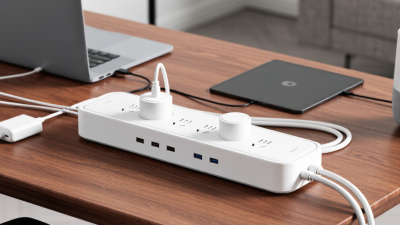
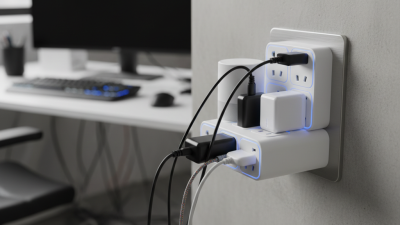
Choosing a grounded EU power strip begins with matching socket count and electrical load to your routine. Buildings account for approximately 40% of the European Union’s energy consumption, according to the European Environment Agency, making sensible power distribution important in homes and offices. A 230V/16A strip rated up to 3,680W can support demanding everyday equipment, but the combined wattage of connected appliances should always remain within the stated limit. For desks, bedrooms, entertainment units, or workspaces, 2-, 3-, 4-, 5-, and 6-way versions provide practical flexibility without adding unnecessary bulk.
Spaced outlets are particularly useful when several chargers, laptop adapters, or large transformer plugs are used together. Rather than allowing one oversized adapter to block neighboring sockets, the wider layout keeps more connections accessible and reduces cable congestion. A slim white enclosure also fits neatly into modern interiors while remaining easy to position on a desk or floor. For higher-load appliances, users should check the plug and appliance ratings, avoid daisy-chaining extension cords, and keep ventilation openings unobstructed.
Safety features deserve equal attention to capacity. Fire-resistant PC construction, integrated safety shutters, grounding, and CE marking are valuable indicators when comparing products designed for the European market. The relevant socket-outlet safety framework, EN/IEC 60884-1, addresses requirements such as protection against electric shock, mechanical strength, and heating performance. A grounded 2–6 socket extension cord with these protections offers a more orderly and dependable way to power household and office equipment.
Compare safety evidence, material traceability, factory capacity, inspection records, delivery reliability, and after-sales support. Price alone is insufficient.
No. Many European markets use 230 volts, while North America commonly uses 120 volts. Always confirm the destination specification.
Look for grounding, child-protection shutters, firm contacts, strain relief, heat-resistant housing, and suitable overload protection. Small parts matter.
No. Not alone. The plug, cable, switch, housing, and internal terminals must work safely as one system.
Request current test reports, certification files, material records, production inspections, and clear model numbers. Screenshots are weak evidence.
Test heat rise, repeated insertion, cable bending, insulation performance, and overload response. Inspect for loose sockets and sharp edges.
Confirm outlet layout, plug type, switch design, colors, cable length, cable size, packaging, and carton markings in writing.
Request a landed-cost sheet covering unit price, packaging, testing, freight, customs handling, and destination delivery. Low quotes may omit key charges.
Compare production time, port options, carton size, loading plans, document accuracy, and mixed-container support. Delays can erase price savings.
Written support should cover defect claims, replacements, spare parts, installation questions, and response timing. Named contacts are better than generic inboxes.
The global Extension Socket market is evolving as buyers seek safer, more reliable, and better-adapted power distribution solutions for residential, commercial, and industrial applications. This overview explains how to evaluate suppliers based on product quality, manufacturing capacity, delivery reliability, customization options, pricing, and after-sales support. It also highlights the importance of recognized safety standards, durable materials, overload protection, grounding design, child-safety features, and appropriate certification for different target markets.
The profiles of the top ten suppliers provide a practical comparison of regional strengths, production capabilities, export coverage, and service models without focusing on individual brands. Buyers can use these insights to assess product consistency, minimum order requirements, private-label flexibility, packaging support, logistics performance, and communication efficiency. By comparing technical specifications, compliance documentation, total procurement costs, and long-term supplier support, importers and distributors can make more informed decisions and select Extension Socket partners that align with their market requirements, safety expectations, and growth plans.