So, when you're sourcing an extension socket, it's not just about getting the cheapest quote. You really need reliable contacts, specs that are crystal clear, and proof that the product will actually fly in your target market. The little things count too—like making sure the plug fits snugly, the shutters are secure, and the cord doesn't develop annoying kinks after you've used it a bunch. Miss even one of those, and the sample might not match what you get in the bulk order.
So, look – market figures are really just context, not a green light to buy anything. Like, Fortune Business Insights estimated the global power strip market at $11.66 billion in 2023, and they think it’ll grow to $17.42 billion by 2032. But honestly, those numbers cover a much broader category, so you shouldn’t treat them as if they’re only about extension sockets. Still, they do point to the fact that people keep needing easy access to power – whether at home, work, or in commercial spaces. And one more thing: standards matter a lot too. So, IEC 60884-1 lays down the requirements for plugs and socket-outlets used in homes and similar settings—but here's the thing: if you're buying these products, you can't just stop there. You've got to double-check the specific national rules for each country you're shipping to. Each destination might have its own quirks, so it's really easy to miss something if you're not careful.
So, this guide rounds up 10 Extension Socket suppliers for folks buying globally. We looked at what they offer, how long they've been in the game, whether they can customize, and how solid their export support is. But we also dug into the nitty-gritty questions that actually matter, like: can they hand over test documentation when you need it? And do they spell out their material options and lead times clearly, or is it all vague? You know, when you're hunting for a 3-socket extension lead, you might catch yourself wondering if it actually fits your plug type and market. But here's the thing—not every supplier is going to be the right match for every project. And comparisons? They're rarely spot-on, especially when different companies share wildly different levels of technical detail. That's definitely worth keeping in mind.
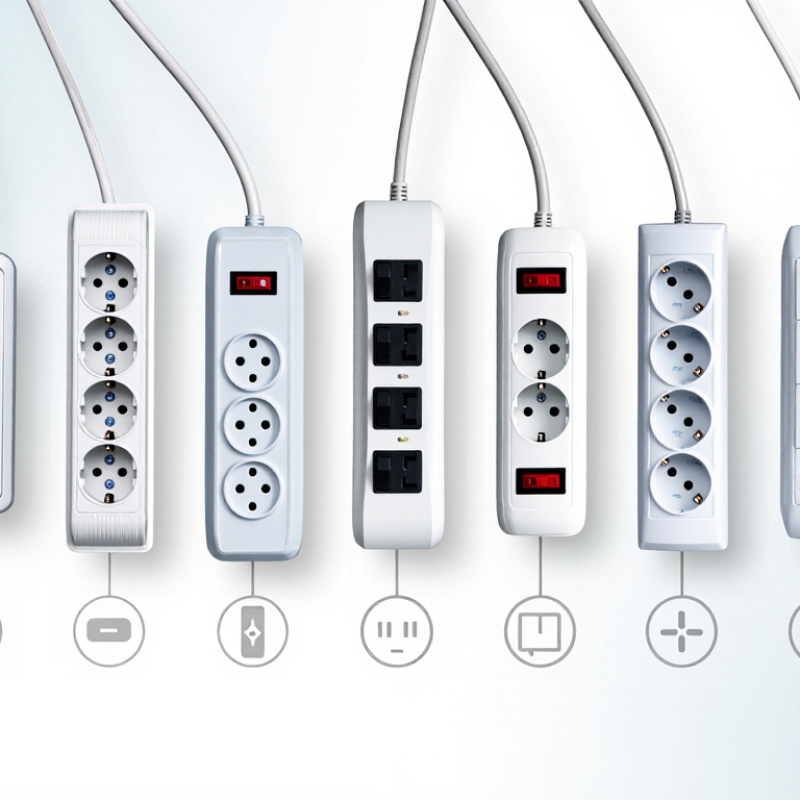
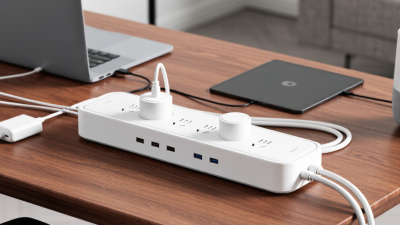
An extension socket is a portable unit that brings several power outlets closer to appliances. It is useful behind a desk, beside a workbench, or where a wall socket is difficult to reach. A Euro Socket Extension can serve equipment designed for compatible European-style plugs, but socket shape alone does not confirm electrical compatibility. Check voltage, current rating, cable condition, and the appliance’s requirements.
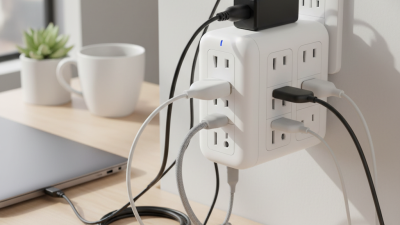
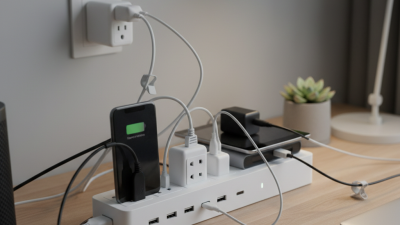
Its role is practical, not limitless: it distributes power from one outlet, but does not create extra capacity. The IEA’s 2024 Global Status Report for Buildings and Construction estimates that buildings consume about 30% of global final energy. That wider context makes everyday plug-in equipment worth considering, though the report does not measure extension-socket use specifically. IEC 60884-2-7 covers cord extension sets; buyers can use it as one reference when reviewing product specifications. In real rooms, users still daisy-chain units. That habit deserves a closer look.
Tips: Place the socket on a dry, ventilated surface, not beneath a rug or a pile of papers. Match its rated load to connected devices, and unplug it if the cable feels unusually warm. Small detail. Big difference. A loose plug or damaged insulation is a reason to stop using it and replace the unit.
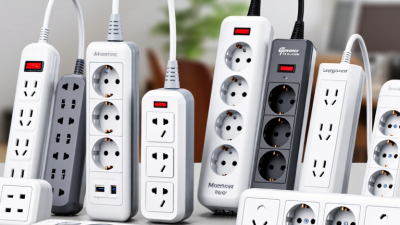
Extension sockets come in several practical forms. A basic multi-outlet strip suits desks and workbenches. Switched models let users isolate connected devices, while surge-protected versions can help reduce damage from voltage spikes. Some units add USB ports, but their total output may be shared across devices. An Extension Switch Socket should match the plug style and electrical system used at its destination.
Check rated voltage, current, and maximum wattage before comparing suppliers. These figures determine which loads the socket can support. Cord length and conductor size matter too: a long, thin cord can heat under heavy use. Look for grounding where required, secure outlet contacts, and overload protection when the application calls for it. Small details matter. A clear rating label is more useful than a crowded feature list.
For kitchens, workshops, or other exposed areas, check whether the housing and outlet design suit the environment. Indoor models are not automatically appropriate near moisture or dust. Ask suppliers for test documentation, material details, and consistent production checks. Plug compatibility can also be easy to overlook. One practical limitation remains: extra outlets do not increase the circuit’s safe capacity, and buyers should size the product around actual loads.
When evaluating extension socket suppliers, look beyond catalog photos and quoted prices. Ask for clear ratings for voltage, current, cord length, and supported plug types. A 3 Pin Plug Extension Socket should have a secure earth connection and a housing that feels solid, not brittle. Small details matter. Check how the cord enters the casing, whether strain relief resists pulling, and whether sockets hold plugs firmly without excessive force.
Request samples and inspect them under ordinary use: connect several devices, move the cord gently, and check for looseness or unusual warmth. Ask suppliers for applicable test reports, material details, and batch traceability. Compare sample quality with production inspection procedures; one good sample does not guarantee consistent batches. I still find this easy to overlook. A checklist can miss a weak point, so ask how defects are recorded and handled. Clear answers are useful. So are realistic lead times, careful packaging, and prompt responses to technical questions. If a supplier cannot explain ratings or provide supporting records, pause before placing a large order. Availability matters, but reliable evidence matters more.
10-point supplier evaluation framework. This is a practical checklist, not a ranking of named companies or a claim that any supplier has been independently assessed.
| No. | Evaluation area | What to verify | Useful evidence or benchmark | Question for the supplier |
|---|---|---|---|---|
| 01 | Target-market compliance | Confirm that the exact extension socket model, plug type, cord and intended market are covered by the applicable requirements. | For household extension cord sets, check whether IEC 60884-2-7 is relevant in the target market. In the United States, UL 817 is a key cord-set standard. Requirements vary by product and country. | Which standards and market approvals apply to this exact model, and can you provide current supporting documents? |
| 02 | Certification and declarations | Match certificates, test reports and declarations to the product model, factory and intended destination. Check validity and scope with the issuing organization where possible. | For EU sales, request the applicable EU Declaration of Conformity and technical documentation. CE marking is generally the manufacturer’s declaration of conformity, not by itself proof of independent testing. | Can you provide model-specific documents and explain which items were independently tested or certified? |
| 03 | Electrical ratings | Check rated voltage, current, frequency and maximum load on the product label and in the technical file. Confirm the rating is suitable for the destination market. | Ratings differ by market and product design; do not assume that one voltage or current rating is suitable worldwide. Verify ratings against the applicable product approval and local supply system. | Are the marked ratings consistent across the product, packaging, test reports and user instructions? |
| 04 | Cord and conductor specification | Review cord type, conductor material, cross-sectional area or gauge, length, insulation and strain relief against the approved design and rated load. | There is no single conductor size suitable for every extension socket. Specifications must match the product’s rating, construction and applicable safety requirements. | Can you provide the cord specification and confirm that production materials match the tested construction? |
| 05 | Product construction and safety | Evaluate plug and socket fit, contact construction, enclosure, shutters where required, grounding where applicable, and protection against cord pull or twisting. | Construction requirements depend on the destination market and the product’s applicable standard. Check the exact configuration in the test report and approved drawings. | Which safety features are included, and are they covered by the model’s compliance assessment? |
| 06 | Quality management | Assess documented production controls, incoming-material checks, in-process inspection, final testing and corrective-action procedures. | An ISO 9001 certificate can indicate a quality management system within its stated scope; it does not replace product certification or prove that every unit is compliant. | Can we review the certificate scope and a sample inspection or test record for this product family? |
| 07 | Batch testing and traceability | Check whether products and production lots can be traced and whether inspection records are retained for shipped batches. | Request a documented lot or date-code system, inspection criteria and batch records. Agree in advance on any independent pre-shipment inspection. | How do you identify production batches and handle a failed inspection or customer complaint? |
| 08 | Materials and environmental requirements | Confirm that material declarations and restricted-substance documentation meet the requirements of the destination market and buyer specification. | For relevant EU products, assess applicable obligations under RoHS Directive 2011/65/EU and REACH. Scope and exemptions can depend on the product and its components. | Can you provide current material declarations or test evidence for the applicable substance requirements? |
| 09 | Commercial terms and capacity | Compare quoted price, minimum order quantity, sample cost, production lead time, packaging options and payment terms for the same specification. | These are supplier- and order-specific commercial terms, not fixed industry benchmarks. Compare written quotations using the same product configuration and delivery terms. | What are the MOQ, sample and production lead times, and which changes could affect the quoted price? |
| 10 | Warranty and after-sales support | Review the written warranty, defect-handling process, replacement or credit terms, spare-part availability and response procedure. | Warranty periods and remedies are contractual and may be subject to local consumer or product laws. Put the agreed terms and claim process in writing. | What evidence is required for a claim, and what remedies and response times are specified in the contract? |
Buyer note: Standards and market rules may be updated, and applicability depends on the product design and destination. Confirm current requirements with the relevant regulator, certification body or qualified compliance specialist before placing an order.
Choosing an extension socket supplier takes more than comparing unit prices. Global buyers should check product specifications, factory quality controls, and the supplier’s ability to provide consistent production records. Ask how each model is tested, what materials are used for the housing and contacts, and whether inspection reports match the delivered batch. Clear answers matter.
A Two Socket Extension Lead may look simple, yet small details affect daily use. Check the rated load, cable length, plug type, socket spacing, and strain relief where the cable enters the body. Request samples and inspect the fit of plugs, the firmness of the switch, and the finish around each socket. Test several units, not just one. Real batches vary.
Reliable suppliers explain lead times, packaging options, and how they handle defects without vague promises. Buyers should also confirm that product documentation and certifications suit the destination market, since requirements can differ. A factory visit or independent inspection can reveal more than a polished catalogue. Still, no checklist guarantees a perfect order; I would keep a written approval sample and review early production carefully. That step can feel slow, but skipped checks often cost more later.
A useful comparison starts with the socket itself: outlet count, rated current, cable gauge, plug type, and overload protection. Ask suppliers for test reports covering the exact model, not a similar product family. IEC 60884-1 provides a reference for household plugs and socket-outlets, while destination markets may require additional national approvals. A certificate list alone is not enough. Check issuing bodies, model numbers, and report dates.
Reach is more than a map of export markets. The World Bank’s 2023 Logistics Performance Index assessed 139 economies across customs, infrastructure, shipment arrangements, logistics competence, tracking, and timeliness. UNCTAD’s Review of Maritime Transport 2023 reports that shipping carries over 80% of global trade by volume. These figures make delivery planning a practical supplier-screening point: request lead times, packaging details, and a sample shipping document. Details matter. A supplier may serve many countries yet struggle with a particular plug configuration or small repeat orders. Rankings can miss that. Compare product depth, verified certifications, and regional service together; no single metric tells the whole story.
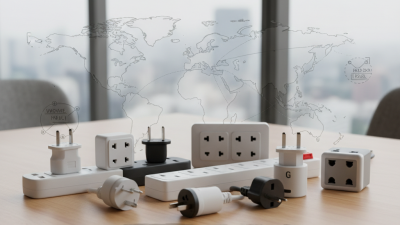
Regional nominal mains voltage is one practical factor buyers should check when comparing extension socket products for different markets.
Typical nominal supply voltages: Japan 100 V; North America 120 V; the United Kingdom, European Union, and Australia 230 V. Actual supply and product requirements can vary, so confirm local standards, plug type, frequency, and certification before purchase.
Sourcing extension sockets across borders starts with the destination market, not the supplier’s catalogue. Confirm voltage, frequency, plug format, grounding, rated current, and required local approvals before requesting quotations. Ask for test reports tied to the exact model, plus clear photos of markings, terminals, and packaging. A certificate for a similar product is not enough. Details matter.
The World Trade Organization’s March 2024 Global Trade Outlook and Statistics projected merchandise trade volume growth of 2.6% in 2024, following a 1.2% decline in 2023. That shift highlights why buyers should check lead times and shipping terms, not just unit prices. Compare quotations on the same basis, including tooling, inspection, freight, and replacement arrangements. Small omissions add up.
For electrical safety, use IEC 60884-1 as a technical reference for household and similar plugs and socket-outlets, then verify each target market’s rules. Request samples from the production line and test fit, contact grip, and heat performance under suitable conditions. Keep approval records linked to model numbers and revisions. A neat spreadsheet helps, but it cannot show how a socket feels during installation. I would still leave room for a second sample review.
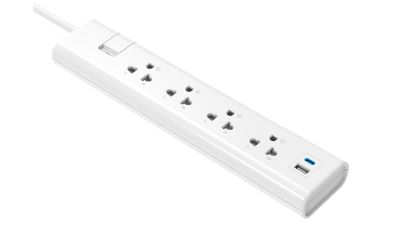
Thailand plug extension leads should be chosen for outlet layout, charging needs, and verified safety—not just the number of sockets. This model provides four AC outlets with a master switch and two USB charging ports, allowing multiple devices to share one power point without separate USB adapters. Buyers seeking USB-C should confirm the port type and its output rating: the USB Implementers Forum’s USB Power Delivery 3.1 specification supports power levels up to 240 W, but that maximum does not mean every USB port or extension lead can deliver it. Check the product’s own rating and match it to the connected devices.
For safety and durability, the unit uses imported flame-retardant material for insulation and high-quality stamped brass terminals designed to resist oxidation and deformation. It is manufactured to TIS 2432-2555, as specified for this product; buyers should verify the applicable certification and electrical ratings before purchase. The National Fire Protection Association has reported an average of 46,700 U.S. home fires annually involving electrical failures or malfunctions during 2015–2019, underscoring why load limits and sound construction matter. As a China-based factory supplier, the manufacturer offers this four-outlet, two-USB configuration; when comparing suppliers, request clear specifications for maximum load, USB output, cord construction, and quality-control testing.
Compare the rated load, cable length, plug type, socket spacing, and strain relief. Ask for records tied to the exact model. Details matter.
One sample may not represent a full production batch. Check plug fit, switch firmness, and the finish around each socket. Batches vary.
Request test reports, product markings, and approvals required for the destination market. Confirm model numbers and report dates. A certificate list alone is not enough.
Compare matching specifications and include tooling, inspection, freight, packaging, and defect arrangements. Small omissions add up.
Check outlet count, rated current, cable gauge, grounding, and overload protection. A neat catalogue cannot show how a plug feels.
Ask for lead times, packaging details, and a sample shipping document. A supplier serving many markets may still struggle with small repeat orders.
A visit or independent inspection can reveal details that product photos miss. It is not a guarantee, though. Keep an approval sample.
Test samples for plug fit, contact grip, and heat performance under suitable conditions. Link approval records to model numbers and revisions. I would allow time for a second review.
This guide explains what an Extension Socket is, how it provides additional power outlets, and where different designs are commonly used. It reviews key types and specifications, including outlet layouts, cable length, rated voltage and current, safety features, and suitability for home, office, or industrial settings. Understanding these details helps buyers match products to practical requirements.
The article also outlines how to assess suppliers by product range, quality controls, relevant certifications, production capacity, and international distribution reach. A comparison of ten supplier options highlights factors buyers can use to evaluate fit without relying on a single criterion. Finally, it offers guidance on international sourcing, such as clarifying technical requirements, requesting product documentation, checking packaging and shipping arrangements, and communicating expectations before placing an order.