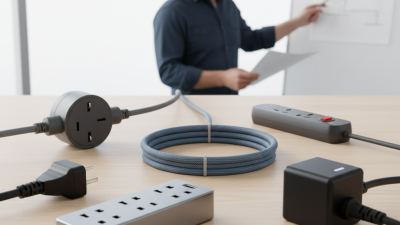
These days, the world’s really pushing for safer, more compact electrical outlets, and that’s turning the power strip market upside down. According to Grand View Research, the global market for power strips is expected to keep growing through 2030, thanks to things like office upgrades, data centers, workshops, and home improvements. Meanwhile, Fortune Business Insights points out that more gadgets and extra protection features are driving this growth even further. But here’s the thing — different reports give slightly different size estimates for the market, and that’s something worth keeping in mind.
A circuit breaker power strip isn’t just about adding more outlets; it actually helps protect your devices. It can cut off power if it detects a current that’s too high, preventing heat buildup that could damage your stuff or cause fires. Good brands usually include things like thermal protection, resettable breakers, surge protection, sturdy flame-resistant cases, and solid grounding. Some models even come in wall-mounted designs — you know, to keep those messy cables away from wet floors or crowded desks. Certifications like UL, Intertek, or TÜV Rheinland can give you some peace of mind, but it’s important to check what those certifications actually cover because a sticker isn’t a guarantee on its own.
John Drengenberg, who used to be the Consumer Safety Director at UL, once said, ‘Power strips don’t give you extra power — they just give you more outlets.’ It’s a simple but good rule to keep in mind. The U.S. Consumer Product Safety Commission also warns folks not to overload these devices or extension cords. Plus, research from the NFPA links faulty electrical setups in homes to fire hazards. That’s why leading suppliers try to stand out by using tested components, being transparent about their ratings, maintaining consistency across their factories, and offering solid tech support. Still, no product can eliminate all risks. Sometimes a breaker trips too late, and cheaper units might hide loose contacts or heat resistance issues. So, it’s a smart move to check independent test results and reviews — don’t just go for the flashy packaging — before choosing a supplier that’s reputable worldwide.
What Is a Circuit Breaker Power Strip?
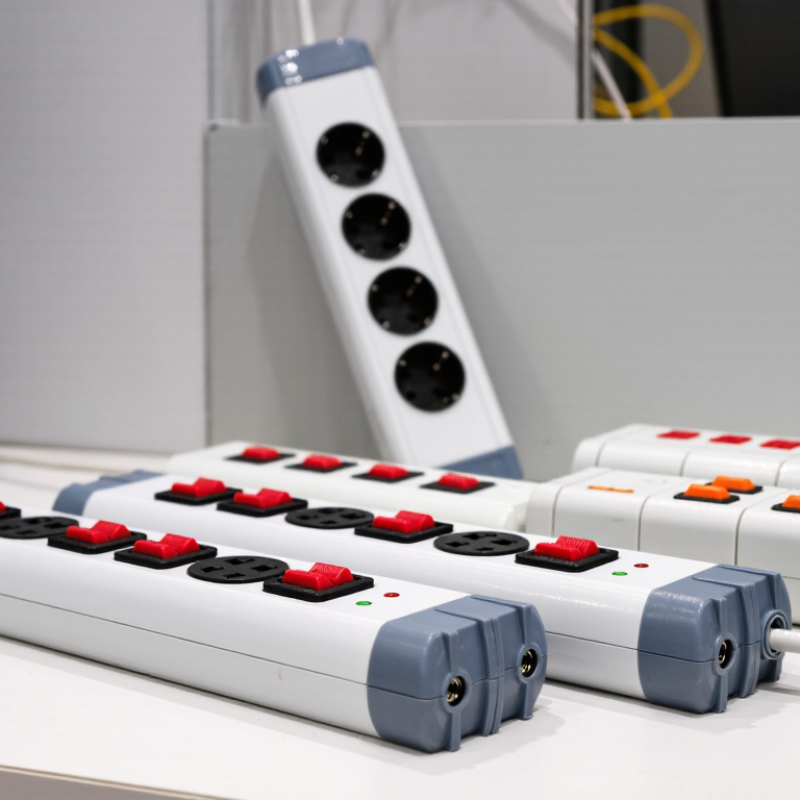
A circuit breaker power strip is a multi-outlet device with an internal overcurrent switch. It cuts power when connected equipment draws too much current. This action helps limit overheating in the strip, plug, and branch circuit. It is different from a surge protector. A breaker responds mainly to excessive current, while surge protection absorbs brief voltage spikes.
For example, a 15-amp, 120-volt strip has a theoretical capacity of 1,800 watts. Continuous loads should generally remain below 80%, or about 1,440 watts, when the applicable electrical rules require that margin. A heater, kettle, or high-power printer can approach this limit quickly. The user should check the product label, cord rating, and local requirements rather than trust outlet count alone. More sockets do not mean more safe capacity.
NFPA’s Home Structure Fires report for 2016–2020 found that electrical distribution and lighting equipment was involved in about 24% of reported home fires. That figure explains why overload protection deserves practical attention. Safety certification standards, such as UL 1363 and UL 1449, also address construction and surge-related performance, but certification does not make careless loading safe. In real use, labels can be hard to read, and reset switches may be mistaken for ordinary power buttons. That is an easy mistake. A warm plug, buzzing sound, or repeated trip deserves investigation, not repeated resetting.
A circuit breaker power strip is a small distribution panel for everyday equipment. Inside, a thermal or magnetic breaker monitors current flowing through the cord. When several devices overload the strip, heat rises or a sudden fault creates magnetic force. The breaker then opens the circuit, stopping electricity before the wiring becomes dangerously hot. Pressing the reset button reconnects power only after the overload is removed.
The breaker does not stop every voltage spike. Many models add metal-oxide varistors, which divert short surges away from connected equipment. This protection weakens after repeated events, so a working indicator is useful but not perfect. In the United States, UL 1363 addresses relocatable power taps, including construction and safety requirements. Buyers comparing an Us Power Strip should check its listed rating, cord size, reset mechanism, and certification details.
The risk is practical, not theoretical. NFPA’s Home Structure Fires report found that electrical distribution and lighting equipment caused about 32,000 home structure fires annually from 2015 to 2019, with roughly 470 civilian deaths each year. The U.S. Consumer Product Safety Commission has also reported thousands of extension-cord-related residential fires annually. These figures do not mean every power strip is unsafe. They show why suppliers should publish test evidence, thermal limits, and clear instructions. A warm plug deserves attention. A warm strip should be unplugged. Sometimes, the simple check is missed.
When comparing circuit breaker power strip suppliers, inspect protection details rather than outlet count. A reliable unit should state rated voltage, current, breaking capacity, and reset behavior. Thermal breakers help prevent overheating from sustained overloads. Surge protection requires a separate performance claim, such as compliance with IEC 61643-11 or UL 1449. These are not interchangeable features.
Look for markings.
In practical inspections, I check plug temperature, cable flexibility, enclosure gaps, and the firmness of the reset switch. Heat leaves clues. A loose switch or warm plug deserves investigation, even when the breaker has not tripped.
UL 1363 addresses relocatable power taps, while IEC 60884-1 covers relevant plug and socket safety requirements in applicable markets.
Suppliers should provide test reports, traceable model numbers, and production inspection records, not vague “certified” language.
NFPA’s Home Fires Involving Electrical Distribution and Lighting Equipment report recorded about 32,000 U.S. home fires annually during 2015–2019, with approximately 470 civilian deaths. That figure supports careful overload control, but it does not prove every power strip prevents fires.
Buyers should compare conductor size, temperature-rise results, flame-retardant enclosure ratings, child-protection shutters, and fault-response testing. I would also question unusually low prices. Some specifications look complete until the actual test conditions are missing.
Leading circuit breaker power strip suppliers worldwide are judged by more than product volume. Reliable suppliers explain breaker ratings, conductor sizes, outlet spacing, and thermal limits in clear technical documents. They also provide traceable test records for overload protection, grounding, insulation, and surge performance.
A strong supplier should support different environments, from office desks to workshops and server rooms. For demanding equipment, buyers may search for a Heavy Duty Power Strip Surge Protector with a resettable circuit breaker and heat-resistant housing. Look for reinforced cable entry points, secure sockets, and visible status indicators. Small construction details matter. Loose switches and thin cords can create operational concerns.
Experienced suppliers usually offer sample testing before large orders. This allows procurement teams to check plug fit, breaker response, cable flexibility, and surface temperature under realistic loads. Regional plug designs and electrical requirements also need careful review. A global catalog is not enough. I have seen specifications that looked complete but omitted continuous-load limits. That gap deserves attention. Suppliers with documented quality control, stable production records, and responsive technical support are easier to evaluate. They should explain inspection frequency, component changes, warranty terms, and replacement procedures without vague promises. Experienced buyers still verify every claim independently, because even a well-presented product can reveal weaknesses during extended use.
Top Circuit Breaker Power Strip Suppliers Worldwide
Regional comparison matters more than catalog size. North American suppliers commonly list UL 1363, UL 1449, and Canadian CSA requirements. European suppliers usually reference CE marking, the Low Voltage Directive, EMC compliance, and IEC 60884-1. Asian suppliers may provide CCC, KC, or PSE approvals, depending on the destination market. These marks are not interchangeable.
Product range also separates capable suppliers from resellers. Basic six-outlet strips suit offices, while a Multi Outlet Power Strip Surge Protector with thermal protection fits workshops and server rooms. USB-C power delivery, resettable circuit breakers, child shutters, and cable lengths should be compared separately. The 2024 Global E-waste Monitor reported 62 million tonnes of electronic waste in 2022. Therefore, suppliers offering RoHS documentation and repairable designs deserve closer attention. Certification lists can look impressive. They do not prove every model is compliant.
Tips: Request a current test report, not only a certificate number. Check rated joules, clamping voltage, breaker response, and plug compatibility. Ask for factory audit evidence and sample testing records. The International Energy Agency’s Electricity 2024 report also highlights rising electricity demand from digital infrastructure, making dependable protection more important. Still, I would not treat one laboratory report as final proof. Verify the exact model, production batch, and destination-market requirements before purchasing.
| Region | Typical Supplier Profile | Common Product Range | Typical Electrical Ratings | Circuit-Breaker and Protection Options | Common Certifications and Standards | Typical Applications | Customization Capability |
|---|---|---|---|---|---|---|---|
| North America | OEM and private-label manufacturers serving residential, commercial, and light industrial buyers | Indoor power strips, heavy-duty workshop strips, surge-protected strips, USB charging strips, rack-mount units, and temporary power distribution products | Typically 120 V AC, 60 Hz; commonly 15 A or 20 A versions; plug and receptacle configurations generally follow local requirements | Thermal overload circuit breaker, resettable breaker, overcurrent protection, metal-oxide-varistor surge protection, EMI/RFI filtering, and lighted reset switch | UL 1363 for relocatable power taps; UL 1449 for surge protective devices where applicable; UL 498 and NEMA configuration requirements may apply to plugs and receptacles; RoHS commonly requested for export programs | Home offices, data and network equipment, workshops, laboratories, retail fixtures, and commercial workstations | High; enclosure material, cord length, outlet spacing, switch type, labeling, packaging, and private-label production are commonly available |
| European Union and EEA | Electrical-accessory manufacturers and contract suppliers focused on CE-marked products and national plug systems | Schuko and French-type power strips, child-protected strips, surge-protected strips, switched extensions, desk modules, and industrial extension distributors | Typically 230 V AC, 50 Hz; common product ratings include 10 A or 16 A; outlet design varies by national plug standard | Resettable thermal breaker, overload cut-off, surge protection based on IEC requirements, touch-protection shutters, and optional master or individual switches | IEC 60884-1 for plugs and socket-outlets; IEC 61643-11 for low-voltage surge protective devices where applicable; EN 50525 for cables where relevant; CE marking may involve the Low Voltage and EMC Directives; RoHS and REACH commonly requested | Residential equipment, office furniture, professional workshops, hospitality facilities, laboratories, and low-voltage commercial installations | High; regional plugs, socket layouts, cable types, child protection, switch configuration, recycled plastics, and multilingual packaging can usually be specified |
| United Kingdom and Ireland | Domestic and commercial accessory suppliers producing fused extension leads and BS-compatible power distribution products | BS 1363 extension leads, fused power strips, surge-protected strips, switched socket bars, desk power modules, and high-load workshop extensions | Typically 230 V AC, 50 Hz; many products are rated up to 13 A; fused plugs are a characteristic requirement of the UK system | Thermal or resettable overload protection, replaceable or non-replaceable plug fuse, surge suppression, indicator lamps, and child-resistant socket shutters | BS 1363-1 and BS 1363-2 for plugs and socket-outlets; BS 1362 for cartridge fuses; BS 5733 may apply to electrical accessories; UKCA or CE marking may be used depending on market-placement requirements; RoHS commonly requested | Homes, offices, schools, retail stores, construction support areas, and professional workbenches | Medium to high; fuse selection, cable length, socket count, switch layout, enclosure design, and labeling can be adapted for private-label programs |
| East Asia | High-volume electronics and electrical-accessory manufacturers with strong tooling, assembly, and export capabilities | Compact travel strips, universal socket strips, USB charging strips, smart-controlled strips, rack power distribution units, and industrial-grade extension products | Market-dependent; commonly 100 V, 110 V, 120 V, or 220–240 V AC at 50 or 60 Hz; ratings often range from 10 A to 16 A for consumer models | Resettable overload breaker, thermal fuse, surge suppression, over-temperature protection, USB overcurrent protection, power monitoring, and remote switching on selected models | IEC 60884-1 and IEC 61643-11 may support international designs; PSE, KC, or CCC requirements can apply according to the destination market; RoHS, EMC, and safety testing are commonly requested for export | Consumer electronics, office equipment, hospitality, retail, server rooms, educational facilities, and export private-label programs | Very high; tooling, firmware-enabled functions, USB-C power delivery, packaging, color, logo placement, and market-specific plug systems are widely configurable |
| South Asia | Regional electrical-accessory producers and export-oriented assemblers supplying residential and commercial distribution channels | Multi-socket strips, fused extension boards, industrial extension boxes, surge-protected strips, USB charging products, and basic rack distribution units | Commonly 230 V AC, 50 Hz; ratings frequently range from 6 A to 16 A, depending on plug, cable, and socket construction | Thermal overload breaker, replaceable fuse, short-circuit protection, surge absorber, overload indicator, and optional individual switches | IEC 60884-1 may be used for international product designs; BIS requirements can apply to covered products sold in India; local electrical-safety, EMC, and RoHS-related requirements depend on the destination market | Homes, small offices, educational facilities, retail counters, computer labs, workshops, and general-purpose commercial use | Medium; cable length, socket count, enclosure color, switch arrangement, plug type, and packaging are commonly adjustable |
| Middle East and Africa | Import-oriented distributors and regional assemblers offering products adapted to mixed plug standards and demanding environmental conditions | Universal power strips, heavy-duty extension reels, surge-protected strips, workshop distribution boxes, rack power units, and products with dust-resistant enclosures | Usually 220–240 V AC, 50 Hz; current ratings commonly range from 10 A to 16 A; local plug configurations vary widely by country | Overload breaker, thermal cut-out, surge protection, high-temperature cable options, sealed switches, and enhanced strain relief for demanding environments | IEC 60884-1 and IEC 61643-11 may be used for international designs; national conformity marks, IEC test reports, CE documentation, and RoHS documentation are frequently requested by importers | Construction sites, offices, hotels, retail premises, workshops, telecom rooms, and backup-power installations | Medium; universal socket layouts, cable construction, enclosure protection, plug compatibility, labeling, and regional packaging can be specified |
| Latin America | Domestic manufacturers and import-focused suppliers serving consumer, office, retail, and industrial accessory markets | Standard household strips, surge-protected strips, heavy-duty extensions, USB charging strips, switched strips, and compact distribution boxes | Market-dependent; commonly 110–127 V AC or 220–240 V AC at 50 or 60 Hz; current ratings often range from 10 A to 20 A | Resettable breaker, thermal overload protection, replaceable fuse on selected designs, surge suppression, indicator lights, and child-protection shutters where required | IEC-based testing is common for export products; national conformity requirements may apply, including INMETRO in Brazil and local safety or labeling rules in other markets; RoHS and EMC files are frequently requested | Residential electronics, offices, small businesses, workshops, retail displays, schools, and light industrial facilities | Medium to high; voltage version, plug configuration, cable length, enclosure, outlet spacing, packaging, and language labeling can be customized |
| Oceania | Electrical-accessory suppliers and importers focused on Australian and New Zealand compliance, with emphasis on safety shutters and robust enclosures | Switched power boards, surge-protected boards, heavy-duty extension products, outdoor-rated products, USB charging strips, and workshop distribution accessories | Typically 230–240 V AC, 50 Hz; common domestic products are rated around 10 A; plug and socket geometry follows local standards | Overload protection, thermal breaker, surge protection, safety shutters, illuminated switches, reinforced cable, and weather-resistant versions for selected applications | AS/NZS 3112 for plugs and socket-outlets; AS/NZS 3105 for electrical accessories such as portable outlet devices where applicable; RCM regulatory marking is used for applicable Australian and New Zealand electrical products | Homes, offices, farms, workshops, construction areas, educational facilities, and commercial premises | Medium; local plug systems, safety shutters, cable type, switch layout, enclosure durability, and packaging can generally be adapted |
Selecting a reliable circuit breaker power strip supplier requires evidence, not attractive packaging. NFPA’s Home Structure Fires report for 2016–2020 found electrical distribution and lighting equipment involved in 24% of home fires. That statistic makes protection quality difficult to ignore.
Ask suppliers for independent test reports covering IEC 60884-1, IEC 61643-11, and applicable local requirements. Confirm rated voltage, current, breaking capacity, thermal protection, and surge performance. For a 6 Socket Power Strip, inspect whether all sockets share one circuit safely. A clear trip indicator and firm reset action matter during daily use. Request production samples, not only laboratory photos. Check the plug pins, cable entry, switch temperature, and enclosure strength after repeated operation.
Supplier experience should be measurable. Review factory audit records, calibration certificates, traceability codes, and corrective-action reports. UL Solutions’ safety research repeatedly emphasizes construction quality and component traceability in electrical products. Still, paperwork can be incomplete. I would compare two samples from different production batches. Small differences may reveal weak process control. Ask how the supplier handles failed units, recalls, and design changes. The cheapest quotation may exclude testing, inspection, or proper copper conductors. That is where risk quietly enters.
Portable power is increasingly important as homes and offices support more connected devices. The International Energy Agency’s *Electricity 2024* report projects global electricity demand to rise by around 4% in both 2024 and 2025, reflecting the growing use of digital equipment, appliances, and cooling systems. At the same time, the U.S. Consumer Product Safety Commission has estimated that extension cords are involved in approximately 3,300 residential fires each year. These figures highlight why choosing an extension socket should involve more than the number of outlets: fire resistance, insulation, construction quality, and compliance are essential considerations.
Designed for the Philippine market, the F31 portable extension cord combines compact portability with dependable daily performance. Its high-quality flame-retardant materials improve fire resistance and electrical insulation, while the one-piece integrated copper bar supports stable current delivery and reduces potential connection weaknesses. Manufactured in accordance with the PNS 60884 safety standard, it is suitable for bedrooms, kitchens, home workstations, offices, hotels, travel, and other everyday environments. Lightweight and easy to carry, it allows users to position power conveniently without creating unnecessary bulk. For distributors and project buyers, OEM/ODM customization, standardized production, and experience across regional regulatory requirements provide a practical route to delivering safe, well-designed, and cost-effective power accessories.
It is a multi-outlet device with an internal switch. The switch cuts power during excessive current draw.
A circuit breaker responds mainly to sustained overcurrent. Surge protection handles brief voltage spikes. They are not identical.
A 15-amp, 120-volt strip has a theoretical limit of 1,800 watts. Continuous use may need to stay near 1,440 watts.
No. All sockets may share one circuit. A heater and kettle can approach the limit quickly. More outlets do not increase capacity.
Watch for a warm plug, buzzing sound, damaged cable, or repeated trips. Stop using the strip and investigate the cause.
No. Repeated trips may indicate overload, damage, or poor connections. Resetting without checking can hide a developing problem.
Request independent test reports, rated current, breaking capacity, thermal protection, and surge performance. Packaging alone proves very little.
Review audit records, calibration certificates, traceability codes, and corrective-action reports. Samples beat photos. Compare units from separate batches.
Inspect plug pins, cable entry, switch temperature, enclosure strength, and reset action. Operate the sample repeatedly. Small differences may matter.
No. Certification supports construction and performance requirements. Careless loading can still cause overheating. Labels can also be difficult to read.
A circuit breaker power strip is a power distribution device designed to connect multiple electrical appliances while providing protection against overloads and short circuits. It combines several outlets with a built-in circuit breaker that automatically interrupts the electrical flow when the current exceeds a safe level. When comparing products, buyers should examine response time, rated voltage, maximum load, outlet configuration, housing quality, surge protection, grounding design, reset functions, and compatibility with recognized safety standards and certification requirements.
Leading suppliers worldwide offer a range of models for homes, offices, workshops, data environments, and light industrial applications. Supplier comparisons should consider regional availability, product variety, customization options, quality control, testing procedures, certifications, warranty support, and delivery capability. To select a reliable circuit breaker power strip supplier, buyers should verify technical documentation, manufacturing experience, inspection processes, material consistency, after-sales service, and compliance with applicable electrical regulations. A dependable supplier should provide clear specifications and stable product performance rather than focusing only on low purchase prices.