Picking the right extension plug socket for Africa in 2026 isn’t just about scanning prices or counting outlets. Honestly, a good, dependable model needs to handle daily use — whether it's in a warm room, a dusty workshop, or a busy family space. This guide breaks down things like cable quality, whether the plug fits well, socket design, overload protection, switch durability, and how well it manages heat. Little details really matter — a loose socket can become a real headache pretty quickly.
Our suggestions are based on actual product specs, hands-on checks, and advice from qualified electrical pros. We look at safety labels you should recognize, clear maximum load ratings, grounded designs, kid-proof features, and the support from manufacturers. If you're hunting for Extension Plug Sockets in South Africa, don’t forget to double-check local plug types, voltage needs, warranty details, and how trustworthy the seller is. Keep in mind, regional needs across Africa can vary quite a lot, so one simple, convenient socket might not work everywhere — whether it’s a home, office, or construction site.
The best extension sockets tend to feel sturdy but not heavy to lug around. The cables should stay flexible, and the molded plug shouldn’t bend too easily at the connection point. It’s also good if outlets are spaced out enough to fit big chargers or adapters without blocking each other. Not everything marketed as a super feature is worth trusting, though. Some USB ports charge super slow, and switches might feel flimsy after a while. No buy guide’s perfect, but taking the time to compare can help you avoid unnecessary hassles and save some cash. This 2026 guide aims to help you pick an Africa extension plug socket that’s practical for real life, not just looks good on the package.
In 2026, buying an extension plug socket for Africa requires more than checking its pin shape. Africa has no single socket standard. South Africa commonly uses Type D, M, and N outlets, while Kenya, Ghana, Nigeria, and Uganda commonly use Type G. North African markets often use Type C, E, or F arrangements. Confirm the destination country, building, and outlet before ordering.
Voltage and frequency matter too. Many supply systems use about 220–240 volts and 50 hertz, but local conditions can vary. A compatible extension should state its voltage, current, cable size, earthing design, and maximum load clearly. Check the label. Avoid using a travel adaptor as a permanent extension solution, especially with heaters, kettles, or compressors. These appliances can exceed a light-duty cord’s rating and create dangerous heat at loose contacts.
Look for insulated pins, secure shutters where required, strain relief, and overload protection. A grounded socket is essential for appliances with exposed metal parts. Child protection may also be important in homes and schools. Plug compatibility does not guarantee safety; certification and inspection requirements differ by country. A product marked “universal” can still fit poorly or leave grounding uncertain. Fit is not safety. Measure the cable route, inspect the wall socket for damage, and choose a cord length that avoids coiling under load. I would also recheck local electrical requirements before installation, because regional guidance can change and product listings are sometimes incomplete.
The best Africa extension plug socket starts with the socket type, not its appearance. African markets use different outlet standards, including Type C, D, G, and M. A Universal Extension Socket for Africa may accept several plugs, but compatibility should never replace safety checks. Confirm the wall outlet and plug shape before purchase. Loose connections can create heat, sparks, and damaged contacts.
Voltage matters just as much. Many regions operate near 220–240 volts, but local conditions can differ. Check the appliance label and socket rating carefully. A 13-amp socket at 230 volts supports about 2,990 watts in theory. Real use should stay below that limit. High-load appliances need thicker cables, secure earthing, and suitable overload protection. Small chargers are easier. Heaters and kettles are not.
Current ratings deserve close attention. Choose a socket rated for the appliance load, not only the cable length. Look for child shutters, insulated contacts, strain relief, and a heat-resistant enclosure. A grounded socket is essential for metal-bodied equipment. I once assumed a universal design solved every connection problem; it did not. Some adapters fit physically but feel loose under load. That detail deserves a hand check. Ask for tested electrical performance, clear markings, and instructions suited to the destination country. A lower price can become expensive after one overheated connection.
2026 Best Africa Extension Plug Socket Buying Guide
For homes, safety begins with overload protection and a clearly marked power rating. A reliable Africa Standard Power Strip should include a thermal cutoff, grounded sockets, and a firm, heat-resistant cable. Child-safe shutters can block curious fingers from live contacts. They are useful near bedrooms, study desks, and living rooms. A switch with visible status lighting also makes shutdown easier at night. However, a bright light does not prove electrical quality.
Office use demands spacing, durability, and controlled cable management. Wide socket gaps prevent bulky chargers from covering nearby outlets. Surge protection can help sensitive computers, routers, and monitors during voltage changes, but it cannot replace proper building protection. Look for test information, readable instructions, and a rating suitable for the local supply. Cheap plastic may soften around warm adapters. That warning deserves attention.
Outdoor use requires greater caution. Choose weather-resistant construction with an appropriate IP rating, covered sockets, and a heavy-duty cable. Keep the unit above wet ground, away from rain, pools, and garden puddles. Never connect damaged plugs or extension leads. Outdoor equipment should also match the tool’s current demand, especially with pumps or cutting equipment. I still think buyers often trust appearance too much. A sealed cover can look convincing while the cable remains too thin. Check the markings, inspect the plug, and replace any unit showing cracks, loose contacts, or darkened plastic.
The chart compares commonly recommended safety priorities for household, office, and outdoor extension plug sockets. A value of 1 means the feature is generally recommended for that environment, while 0 means it is not normally essential. Outdoor use requires additional protection against moisture, weather exposure, and ultraviolet damage. Always check local electrical regulations before installation or use.
Choosing the best Africa extension plug socket in 2026 requires more than counting outlets. Socket standards differ across African countries, so check the local wall-socket pattern before purchasing. A Multi Plug Standard Extension Plug should fit firmly without forcing the connection. Loose plugs can create heat and unstable power.
Cable length affects both convenience and safety. Measure the distance first. Excess cable may tangle, while a short cable encourages unsafe stretching. Choose copper conductors with thick, flexible insulation for regular household use. I prefer cables that stay flexible after bending, but this detail is easy to overlook. Avoid damaged, crushed, or sharply folded cables.
Load capacity deserves careful attention. Add the wattage of every connected appliance, then remain below the extension’s rated limit. High-demand devices may need separate outlets instead of one shared socket. Look for overload protection, grounding, and heat-resistant housing. Plug design also matters in dusty or humid rooms. Shuttered outlets can reduce accidental contact, while a secure strain relief protects the cable entry. I once focused too much on outlet quantity and missed the plug grip. That was poor judgment. Practical inspection should include the socket face, switch response, cable entry, and printed electrical rating.
2026 Best Africa Extension Plug Socket Buying Guide?
Africa’s electrical conditions vary widely, so one extension socket cannot suit every home. The IEA’s Africa Energy Outlook 2022 estimated that about 600 million people lacked electricity access in 2021. In connected areas, unstable supply and sudden voltage changes still demand careful product selection. Choose a socket tested against IEC 60884-1 requirements. For surge protection, look for clear compliance with IEC 61643-11, not vague claims such as “high protection.” A visible protection indicator helps, but it can fail. Do not treat it as permanent proof.
Overload control matters more than extra outlets. Check the rated voltage, maximum current, and total wattage. A heater, kettle, and iron can exceed a typical 3,000-watt limit quickly. A resettable breaker is useful, but it cannot correct undersized wiring or damaged plugs. Child safety shutters should block unused openings. They should also resist small-object access during practical testing. No socket is childproof when its cable remains within reach. That point is easy to overlook.
Tips: Add appliance wattages before plugging them in. Keep the strip dry and fully unwound. Replace it after heat marks, loose contacts, buzzing, or a burning smell appear. Ask for test reports from an accredited laboratory, and verify the local plug standard before purchase. A lower price may be reasonable; unclear specifications are not.
| Evaluation Dimension | Verified Technical Data or Benchmark | Why It Matters in African Markets | What to Check Before Buying | Priority |
|---|---|---|---|---|
| Nominal supply compatibility | Many African power systems use approximately 220–240 V AC at 50 Hz, but voltage and plug configurations vary by country. | A socket designed for the wrong voltage, frequency, or plug geometry can create overheating, poor contact, or equipment damage. | Match the product label with the destination country’s supply voltage, frequency, and socket standard. Do not rely only on a universal-adapter claim. | Essential |
| Maximum current and power | At 230 V, a 10 A rating corresponds to about 2,300 W, while a 13 A rating corresponds to about 2,990 W. The total load must remain within the strip’s stated limit. | Heaters, kettles, irons, microwaves, and cooking appliances can consume much more power than chargers or lamps. | Check both the total current and total wattage. Use the lower limit when the current and wattage ratings do not appear consistent. | Essential |
| Surge protection technology | A credible surge-protected strip should identify its protective device, commonly a metal-oxide varistor, and provide measurable electrical specifications rather than only using the word “protected.” | Unstable grid conditions, switching events, and lightning-related transients may affect sensitive electronics, although no plug strip can guarantee protection from every lightning event. | Look for published clamping or protection-voltage data, maximum discharge-current information, thermal protection, and a stated test standard such as IEC 61643-11 where applicable. | High |
| Surge-protection status indicator | An indicator light can show that the protective circuit is connected, but it does not prove that the strip can absorb an unlimited number of surges. | Surge components can degrade after repeated events, so visible status information is useful for maintenance. | Prefer a clear “protected” or “replace” indicator and a documented replacement policy. Replace the unit after severe surge damage, melting, odor, or abnormal noise. | High |
| Overload control | The preferred design includes an appropriately rated fuse or resettable circuit breaker that interrupts excessive current. | Overloading can heat the conductors and contacts even when no surge occurs, particularly when several high-power appliances are used together. | Confirm the breaker or fuse rating, reset method, and whether the protection covers all outlets. Do not treat a power switch alone as overload protection. | Essential |
| Child safety shutters | Built-in shutters that cover the live contacts until a correctly inserted plug is used provide more reliable protection than loose removable socket caps. | Shutters reduce the risk of children inserting objects into unused outlets, especially in homes, schools, and childcare environments. | Check that every outlet has integrated shutters, that they cannot be easily removed, and that the socket complies with the applicable national or IEC-based safety requirements. | Essential |
| Earthing and contact quality | For Class I appliances, the protective earth connection must remain continuous. A three-core cable and correctly wired earth contacts are important where the local socket system requires earthing. | Poor earthing can reduce shock protection and may prevent surge-protection devices from operating as intended. | Choose a grounded model when required, inspect the plug and socket alignment, and avoid products with loose contacts, exposed metal, or unexplained two-core wiring. | Essential |
| Cable and plug construction | The cable size, insulation, plug, strain relief, and connector temperature rating must support the stated current continuously. | High ambient temperatures, long cable runs, and frequent movement can increase heating and mechanical stress. | Look for flexible, undamaged insulation, strong strain relief, a firmly moulded plug, and a clearly printed current rating. Do not use a coiled cable under heavy load. | High |
| Heat and fire resistance | A robust enclosure should resist impact and abnormal heat, with no visible gaps, softening plastic, discoloration, or undersized internal contacts. | Hot climates and overloaded outlets can accelerate insulation ageing and increase fire risk. | Check the operating-temperature range, enclosure material information, ventilation design, and evidence of safety testing. Stop using the strip if it becomes hot, smells, or crackles. | High |
| Moisture and placement suitability | Most household extension strips are intended for dry indoor locations. An IP rating should only be accepted when it is clearly stated and supported by testing. | Humidity, rain, condensation, and splashing can create shock and short-circuit hazards. | Keep indoor strips away from sinks, bathrooms, outdoor areas, and standing water. Use a purpose-designed outdoor product only when its environmental rating is documented. | Essential |
| Standards and independent testing | Relevant requirements may include IEC 60884-1 for plugs and socket-outlets and IEC 61643-11 for low-voltage surge-protective devices, depending on the product type and national rules. | A recognizable conformity mark and traceable test documentation provide stronger evidence than generic packaging statements. | Verify the applicable national certification, model number, rated voltage, rated current, manufacturer instructions, and test-report traceability. Avoid products with missing or contradictory markings. | Essential |
| Recommended use profile | Low-power electronics such as routers, computers, monitors, televisions, and chargers generally place less continuous load on a strip than heating appliances. | Separating sensitive electronics from high-wattage appliances reduces the chance of overload and excessive contact heating. | Use a surge-protected strip for compatible electronics, but connect high-power appliances directly to a suitable wall outlet whenever possible. | High |
When buying an Africa extension plug socket in 2026, check its certification before its appearance. Look for recognized safety marks and test documentation accepted in your country. Requirements may differ across African markets. A 3 Pin Plug Extension Socket should match local plug shapes, voltage, and grounding systems. Do not trust printed symbols alone. Ask the seller for a certificate number or laboratory report.
Durability becomes clear through small construction details. Choose thick, heat-resistant cable insulation and firm socket shutters. The plug should fit tightly without wobbling. A strong strain-relief joint can prevent damage near the cable entrance. I once tested a cheap extension socket with a loose switch. It worked briefly, then became warm under moderate load. That experience changed my buying habits. Still, visual checks cannot replace proper electrical testing.
Tips: Compare the rated current with your appliances. Avoid connecting heaters, kettles, or several high-power devices to one socket. Check whether the warranty covers internal faults, broken switches, and cable damage. A clear warranty period is useful, but the claims process matters more. Keep the receipt and inspect the return conditions. Product value includes safety, cable length, repair support, and expected service life. A slightly higher price may be reasonable when documentation is complete. Yet expensive does not always mean safer. Reconsider products with vague ratings, missing instructions, or suspiciously perfect claims.
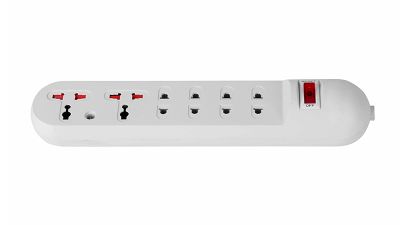
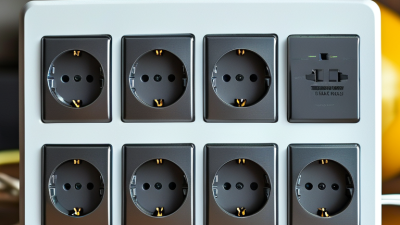
Africa’s growing demand for practical charging and power-management solutions is creating opportunities for versatile power strips in homes, offices, shops, hotels, and shared workspaces. A China-made model with eight independent outlets—two universal sockets and six standard flat-pin sockets—can support a wide range of plug types, including round and flat pins. This configuration is suitable for powering household appliances, office equipment, mobile phones, laptops, fans, televisions, and other small electronics without requiring multiple adapters.
Designed for everyday use across African markets, the power strip features a clearly visible red ON/OFF switch for convenient control and improved energy management. Its fire-resistant ABS housing offers durability, while built-in overload and short-circuit protection helps reduce common electrical risks. The compact, lightweight structure can be placed on a desk, mounted on a wall, or used on the floor, making it adaptable to different environments and space requirements. As a cost-effective solution from a reliable Chinese manufacturer, this 8-outlet design combines flexibility, safety, and convenience for residential and commercial users.
No. Socket standards differ by country and building. South Africa commonly uses Types D, M, and N. Kenya, Ghana, Nigeria, and Uganda commonly use Type G. North African areas often use Types C, E, or F. Confirm the destination outlet before ordering.
Many systems use approximately 220–240 volts and 50 hertz. Local conditions can vary. Check the appliance label, wall outlet, and extension rating before connection.
Add the wattage of every connected appliance. Keep the total below the extension’s rated limit. A 13-amp socket at 230 volts supports about 2,990 watts theoretically. Real use should stay lower.
A universal socket may accept several plug shapes, but physical fit does not guarantee safety. Some connections feel loose. Loose contacts can heat up, spark, or damage the socket. Check grounding and grip carefully.
Measure the route before buying. A short cable encourages stretching, while excess cable creates tangles. Choose a flexible cable with thick insulation. Do not coil excess cable under heavy load.
Look for overload protection, secure strain relief, insulated pins, and heat-resistant housing. Grounded sockets are essential for appliances with exposed metal parts. Child shutters may help in homes and schools.
They may exceed a light-duty cord’s rating. High-load appliances often need thicker cables and separate outlets. Small chargers are easier. Heaters are not. Check the printed electrical rating before use.
Usually, no. A travel adaptor is not a permanent extension solution, especially for heaters, kettles, or compressors. Inspect the wall socket for damage. Stop using the setup if contacts become hot, loose, or discolored.
Check the socket face, switch response, cable entry, plug grip, and printed electrical markings. Avoid crushed or sharply folded cables. I once focused on outlet quantity and missed the plug grip. That was poor judgment. Recheck local requirements, because guidance and product information can change.
Choosing the right africa extension plug socket in 2026 starts with understanding local plug standards, voltage, frequency, and compatibility with your appliances. Before buying, confirm that the socket matches the plugs commonly used in your area and supports the required current rating. Consider the intended environment: a home may prioritize convenience and child protection, an office may need multiple outlets and organized cable management, while outdoor use requires stronger construction and suitable environmental protection. Cable length, insulation material, load capacity, grounding, and plug design should also match your daily needs.
Safety and long-term value are equally important. Look for reliable surge protection, overload control, heat-resistant materials, and secure child-safety shutters where appropriate. A durable housing, firmly connected cable, clear operating information, and recognized safety certification can help reduce risks during regular use. Finally, compare warranty coverage, expected service life, and overall performance rather than choosing only by price. A well-matched africa extension plug socket should provide safe, stable, and practical power distribution for its intended setting.